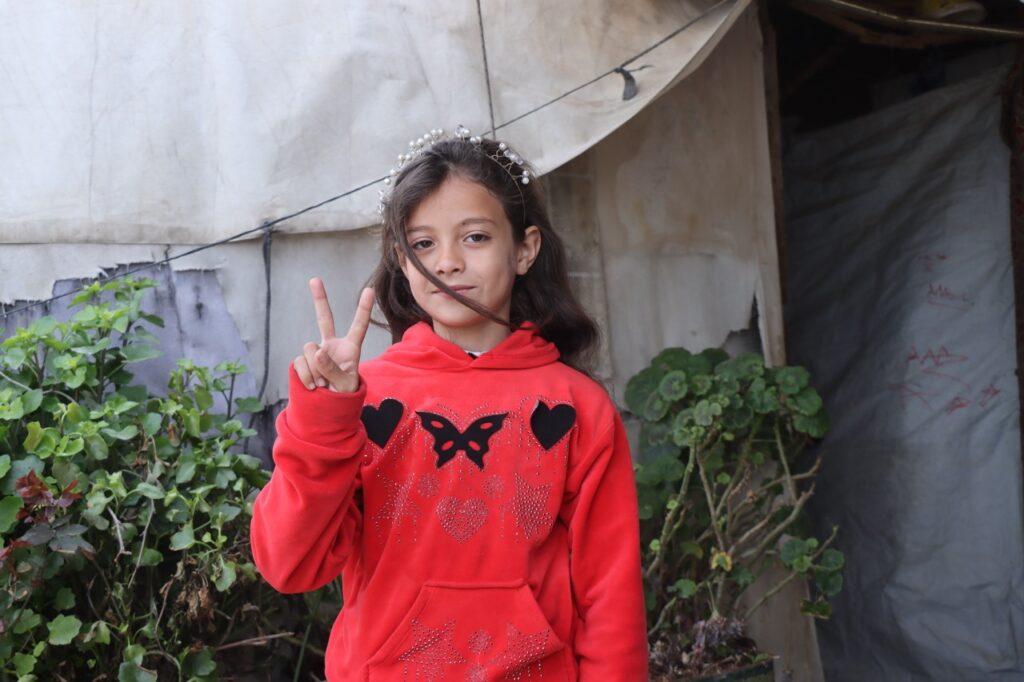
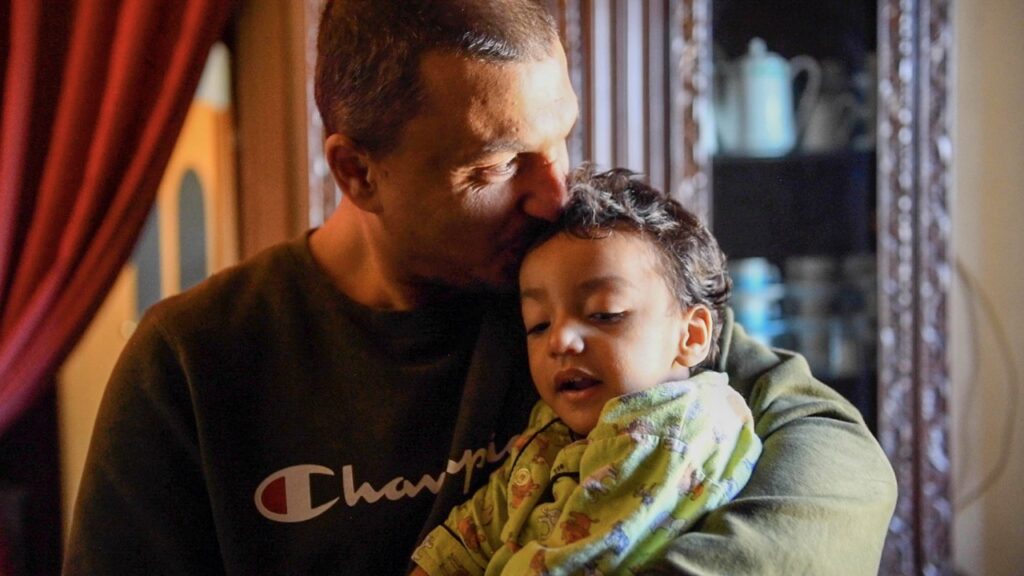
Amid the rows of plants between the tents, Mahmoud stands holding a water jug to irrigate the plants. This helps him regain a sense of home. Mahmoud*, 52, is displaced from Hama and lives in a tent with his wife and three children in Idlib, northwest Syria. Before the war broke out in 2011, he worked as a plumber and electrical repairman.
When work slowed down, he traveled to neighboring Lebanon to work as a daily-wage farmer, making just enough income to provide food for his family and cover their basic needs.
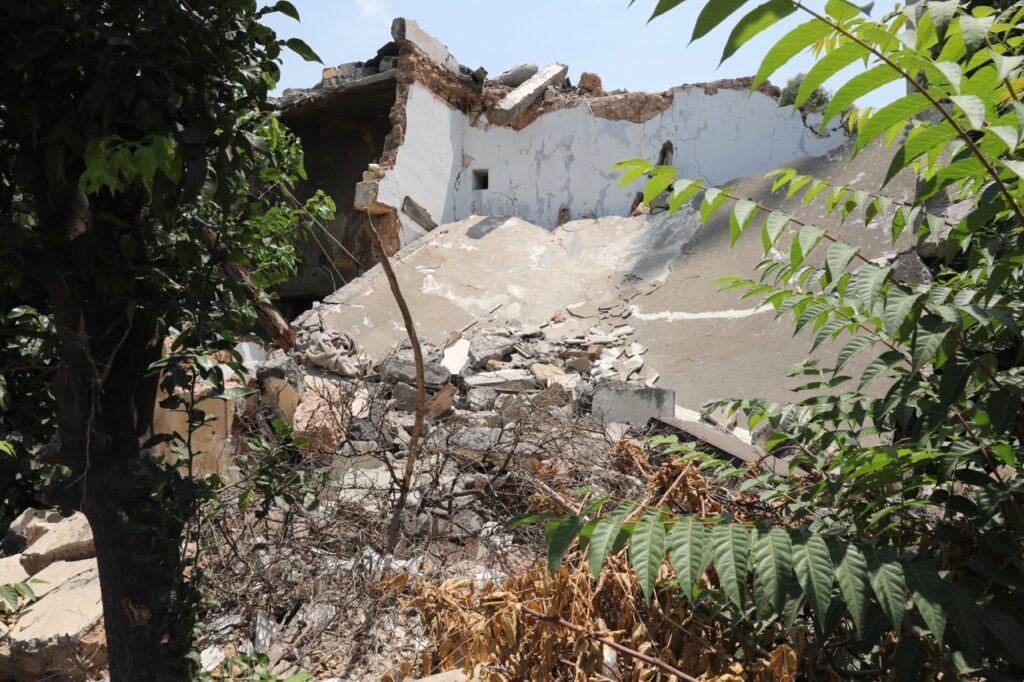
Mahmoud was unjustly detained for one year in 2012, where he sustained a spinal injury due to the abuse he suffered in imprisonment. He was never charged or put on trial. Eventually, his wife secured the sum of money needed to bribe an official to get him released. After his release, Mahmoud was shocked to find his village completely destroyed, and to learn that his family and neighbors had been displaced to neighboring governorates, forced to live in tents.
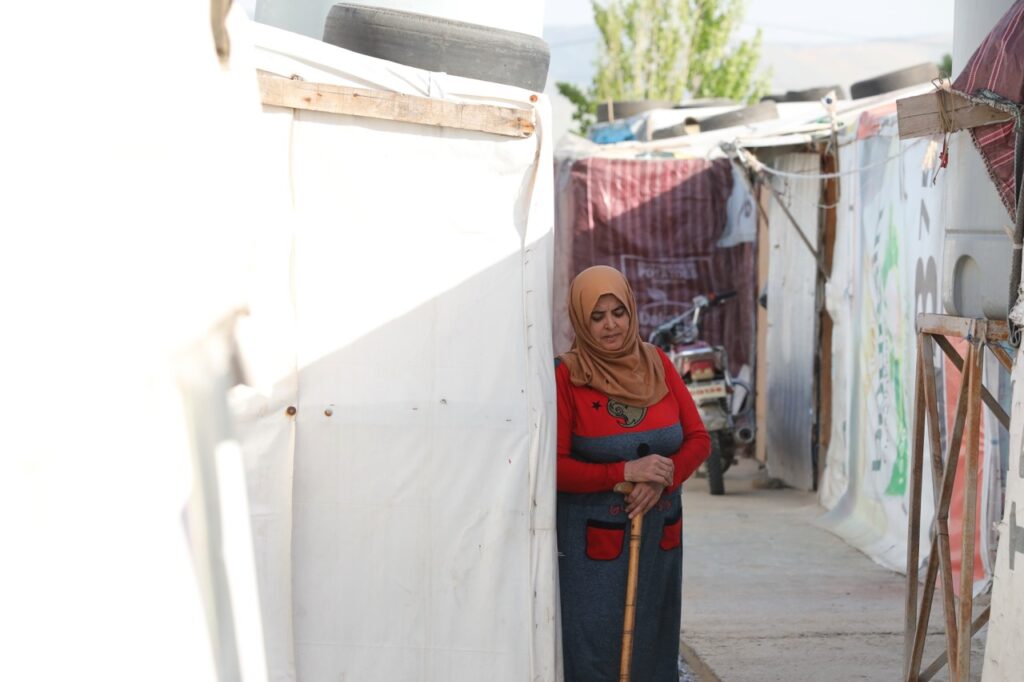
His family had to move from one place to another in search of safety until they finally settled in a camp in Idlib.
"They were displaced five times," said Mahmoud.
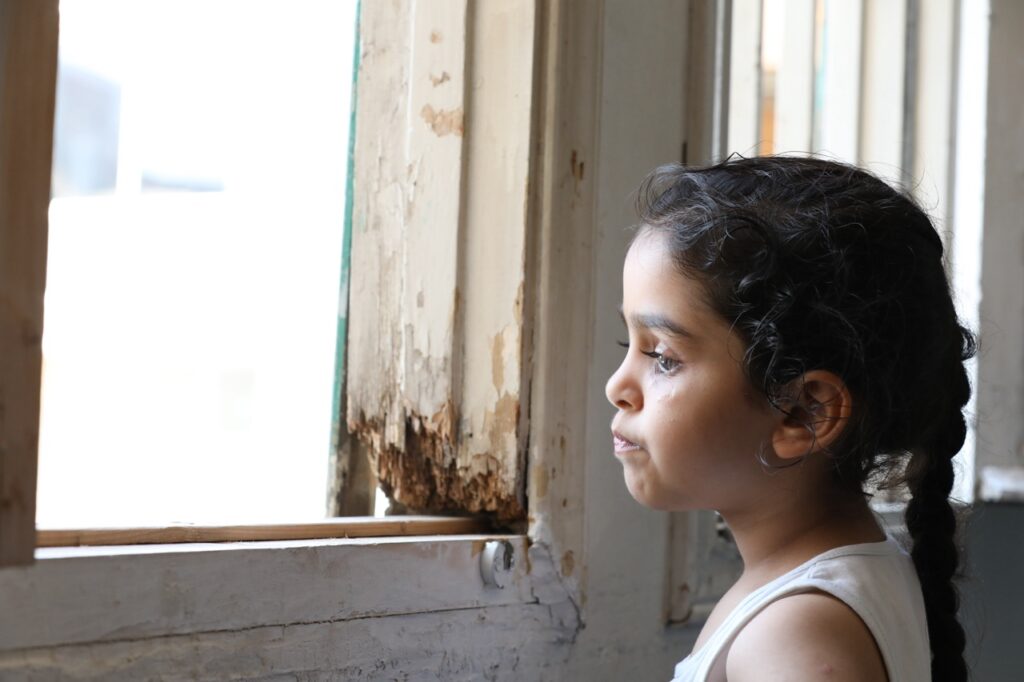
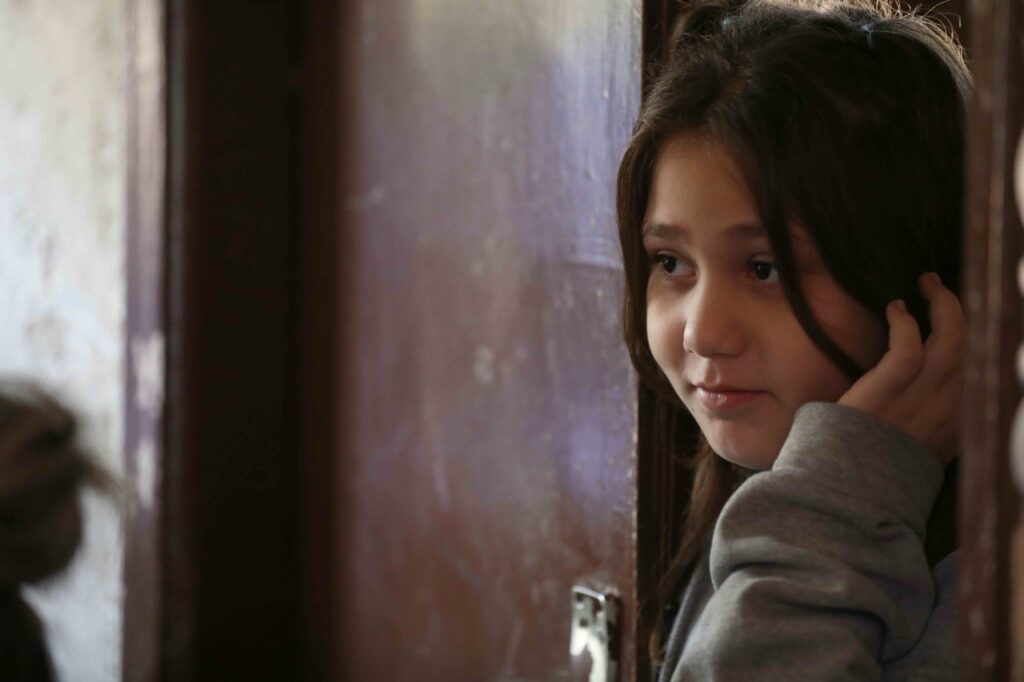
Mahmoud’s children, the eldest of whom is 20 years, and the youngest 8, had their education disrupted due to their frequent displacement and the lack of opportunities for continuing education at the displacement camps, where school stops at fourth grade.
"Everything can be replaced, the house, land, and money we lost, but not the years of education my children lost," Said Mahmoud.
Mahmoud waters the plant beds, recalling the days of farming on his vast land. Like all displaced people who resort to borrowing to meet their needs, Mahmoud's family faces significant financial challenges, especially with his inability to work due to his disability.
"We lived a normal and dignified life before the war. Today, I can't work, and we are far from home. Our most important need is bread,” said Mahmoud. “Two days ago, I borrowed money from a friend to buy bread. I have another friend I borrow vegetables from, and another to secure the rest of our food needs."
Mahmoud picks parsley from his little herb patch to prepare salad for breakfast.
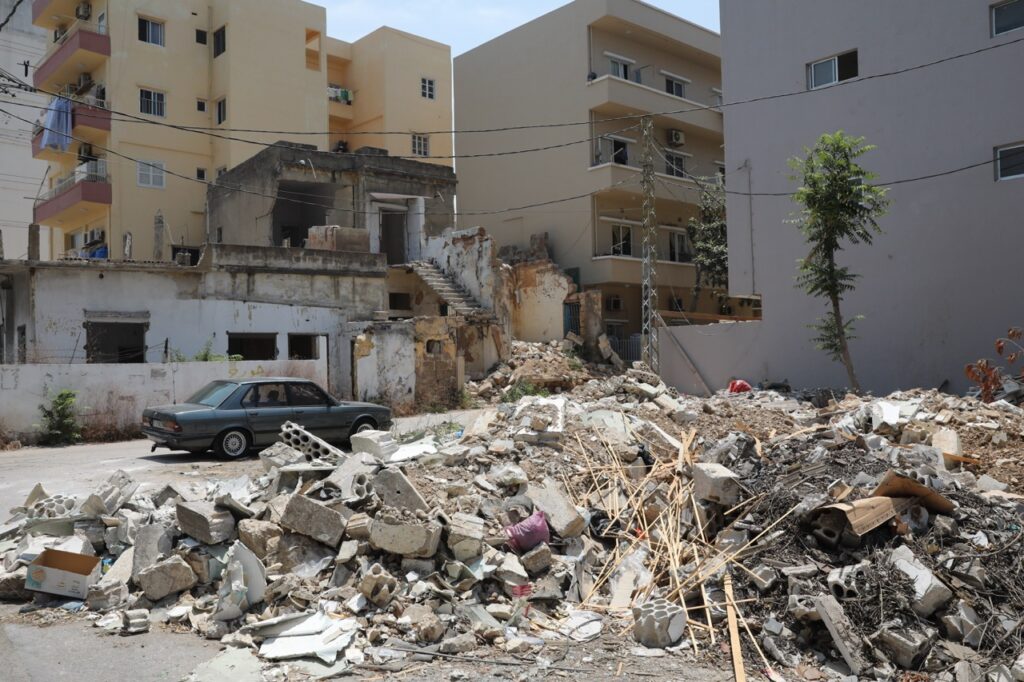
With the fall of Assad's regime, the hope of returning home after 14 years of exile has been restored for millions of displaced people in Syria. But the journey back home is filled with obstacles, as most of the cities and villages that witnessed large-scale displacement have suffered widespread and systematic destruction.
"The biggest challenge I am facing right now is the lack of money, including the money needed to return home and start clearing the rubble and rebuilding our home,” said Mahmoud. "I wish the international community would lift sanctions on Syria as they directly affect us. I hope the organizations that helped us during our displacement will assist us in the restoration and reconstruction of our homes and public spaces.”
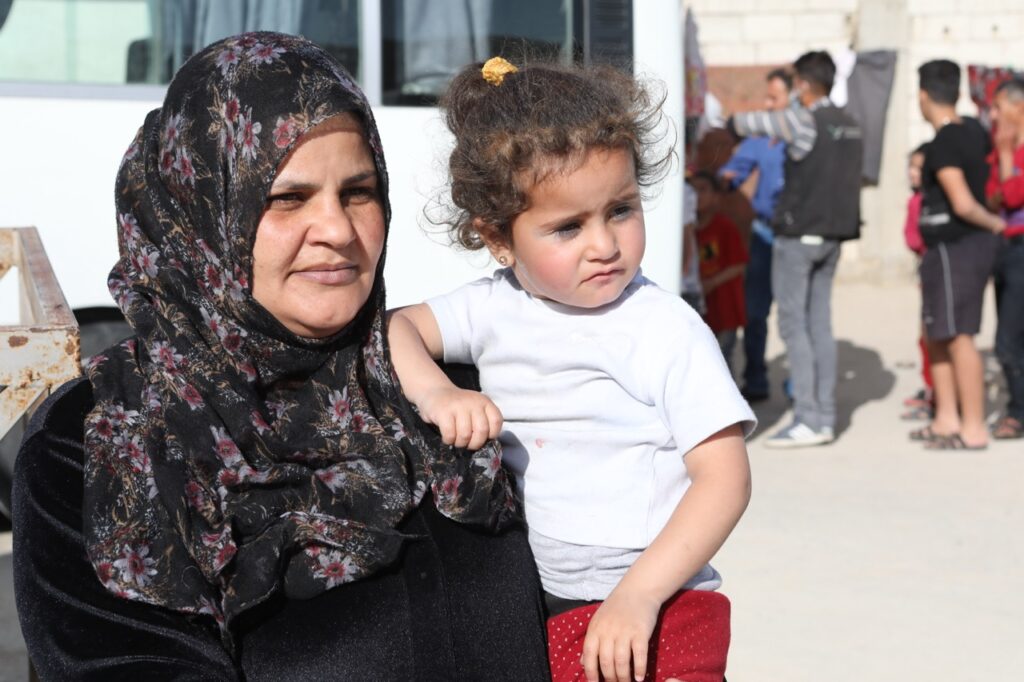
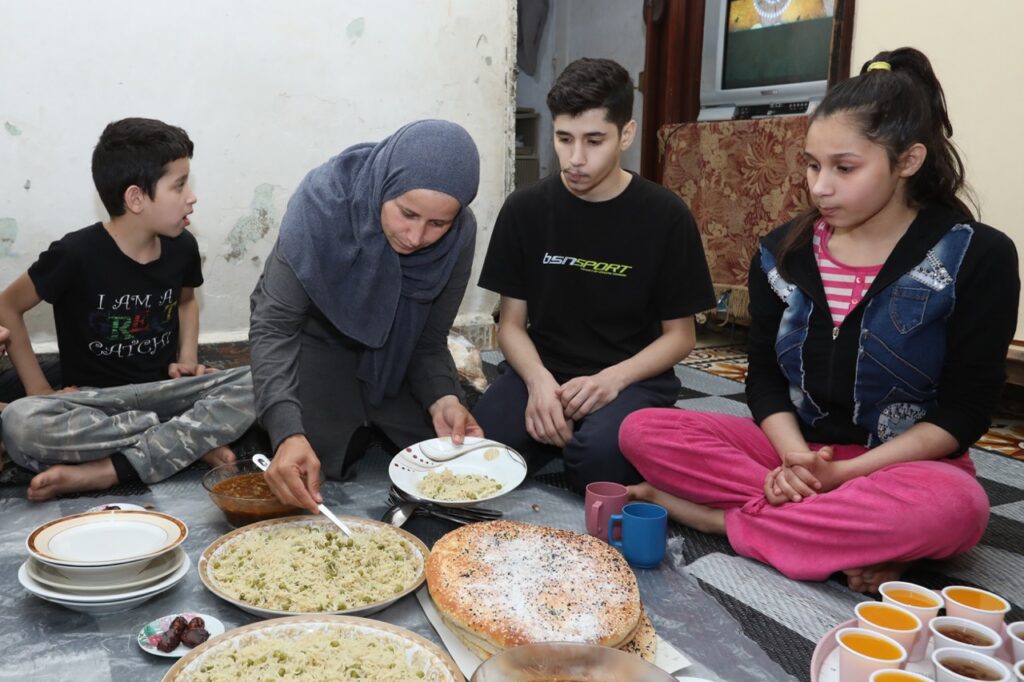
CARE with its partner, IYD, funded by the European Union, launched a cash assistance distribution project in April 2024 to respond to the dire needs of vulnerable families in northwest Syria. This initiative aims to improve food security for these families, helping them meet their essential food needs. Each family receives a monthly cash voucher of 65 USD.
* Names changed to protect identity
Photos: IYD/CARE